|
|
|
|
|
|

|
As we step into 2025, I am thrilled to present the first edition of the Sake Club India (SCI) newsletter for this year. The past year has been phenomenal, with a growing appreciation for sake in India. Hence, our cover story explores five key factors that make 2025 an exciting year for sake in India.
|
This edition is special for another reason, as we include our first ever guest article on the SCI blog. The article is penned by Raveena Paul, a Tokyo-based Indian who has seamlessly embraced the Japanese way of life. Raveena's article on sparkling sake ups the celebratory quotient of this issue.
|
January is also the season for Shiboritate or "just pressed sake," a fresh brew that embodies the spirit of the new season. Don’t miss our Knowledge Bytes section complemented by a video of my personal experience with Shiboritate that will bring you the epitome of sake freshness.
|
As always, I will be grateful for any suggestions that you may have for improving this newsletter.
|
|

|
|
|
|
|
India Diary
|

|
|
|
|
2024 marked a historic milestone for Japanese Sake, as it was officially recognized as a UNESCO Intangible Cultural Heritage. In India too, the registration of GI Nihonshu (Japanese sake) has further opened doors for smoother imports, bringing this celebrated beverage closer to Indian consumers. Here are five such developments that make us upbeat on the future of Sake in India.
|
|
|
|
|
|
Sparkling Sake
|

|
So, what makes Sparkling Sake stand out? A lot rides on its unique character, as it takes traditional sake’s rice-driven flavor and softens it with delicate effervescence.
|
|
Unlike Champagne or Prosecco, which lean on acidity or fruit, the magic of sparkling sake lies in its balance, mellow sweetness elevated by bubbles, and umami and bitter notes to keep it grounded, ending in a lovely clean finish.
|
|
|
|
|
|
|

|
|
Knowledge Bytes
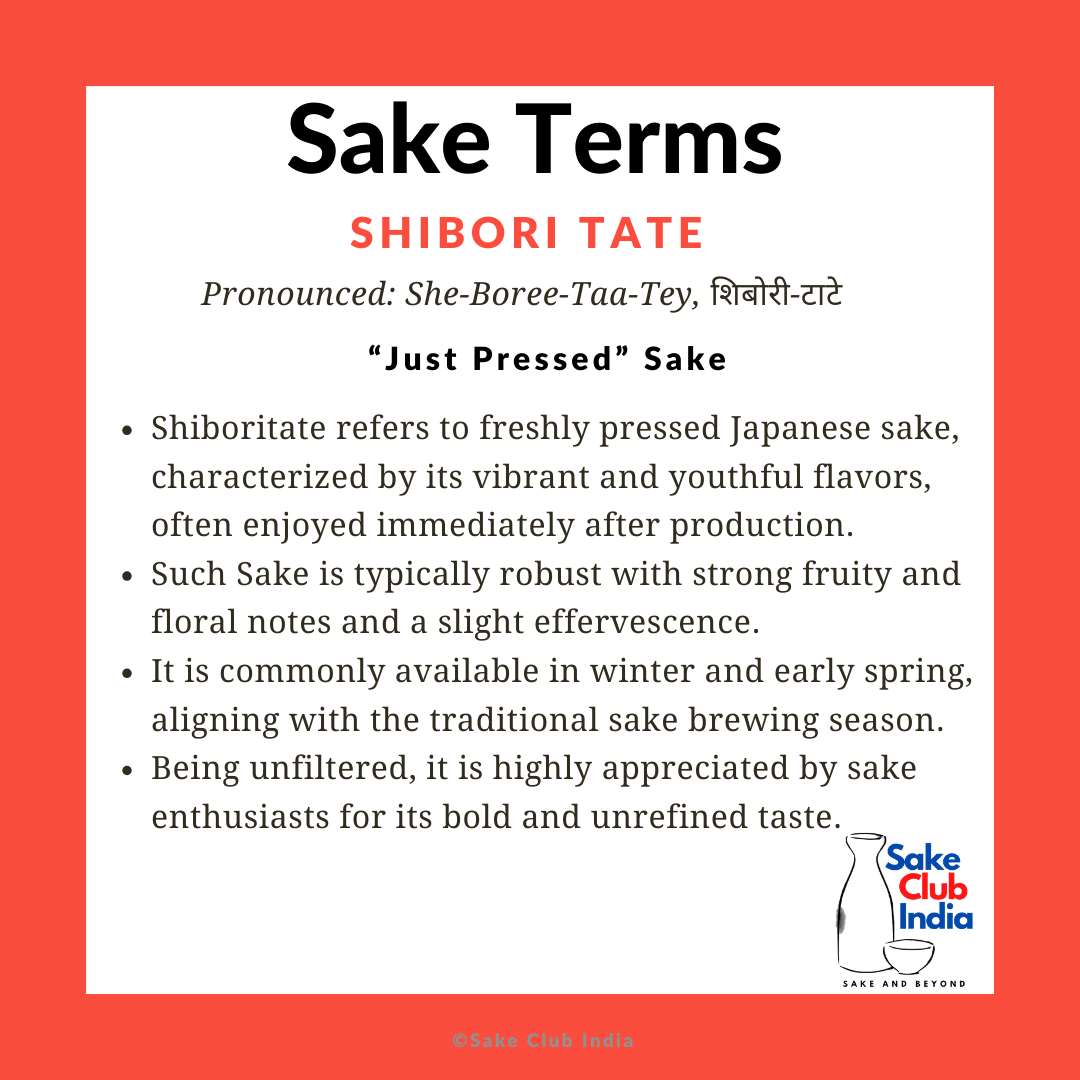
Sake Terms: Shiboritate
Most sake is brewed during the colder months, from late autumn to early spring, and Shiboritate is released soon after pressing, often in late winter or early spring.
|
Its vibrant, bold flavors and youthful character, make it a popular choice at seasonal sake events and celebrations, including New Year's and early spring festivals.
Here is a graphic on Shiboritate that you could save for posterity. Also, watch a video on our first-hand Shiboritate experience in this very issue.
|
|
|
|
Global Diary
Curated Article
|
|
|
|
While sake consumption has declined in Japan, breweries across the nation are taking advantage of a rise in overseas interest to promote it through tourism.
|
|
|
|
|
|
|
|

|
|
Video
|
|
|
The highlight of this issue is Shiboritate, as you might have probably noticed by now.
|
We had a first-hand experience of Shiboritate at Nakagawa Brewery in Tottori Prefecture, which is renowned for its dedication to traditional brewing methods.
|
This sake, drawn directly after pressing, burst with bold, fruity aromas and a sharp, effervescent flavor. Its bright acidity and slightly unrefined edge made it distinctive from the regular sake that we taste in the normal course.
|
Our experience at the Nakagawa Brewery was immersive, as the sake's freshness perfectly captured the essence of its craftsmanship, leaving a lasting impression of the region's rich brewing heritage.
|
Do subscribe to our YouTube channel if you like the video, and would like to be updated on future ones. Thanks!
|
|
|
|
|
|
|
|
|
|
|
|
|