

Sparkles imply celebration — and we have long toasted life’s joyous moments with Champagne, Prosecco, Cava, and other bubblies. But here’s a question for your next festive conversation starter: Do you know what Awa Sake is? As we wrap up the year and raise our glasses to new beginnings, it’s time to explore Japan’s elegant answer to sparkling wine — a category that is steadily finding its place on the world stage.
Sparkling Sake: A Rising Star
Sparkling sake has grown rapidly in popularity, not only in Japan but across global dining scenes. Refreshing, and food-friendly, sparkling sake comes in various styles — from lightly carbonated fizz to more robust bubbly sensations.
Many sparkling sakes are made by injecting CO₂ or allowing secondary fermentation in the bottle (similar to wine), but the quality and clarity can vary. This is where Awa Sake steps in — a category with a strict set of standards that elevate it into a refined and truly celebratory drink.
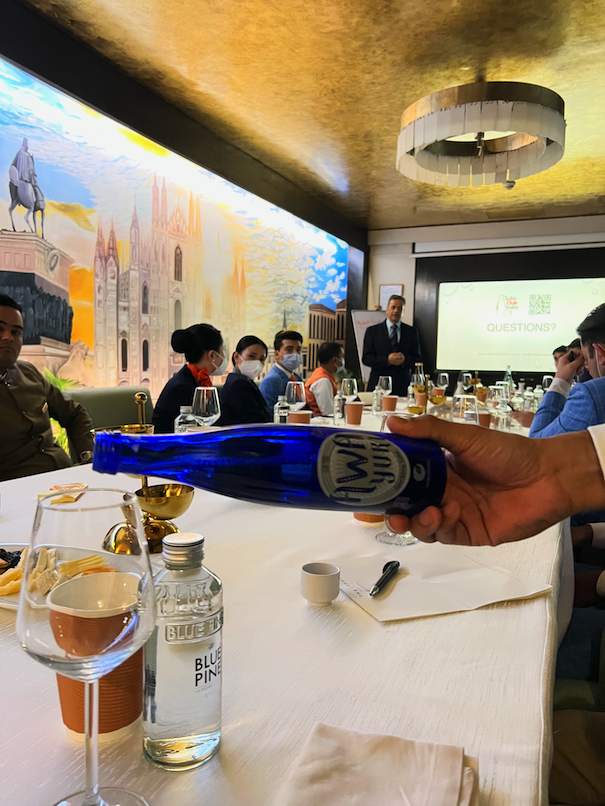
What is Awa Sake & the Awa Sake Association?
“Awa” means bubbles in Japanese, and Awa Sake refers to a premium classification of sparkling sake made exclusively through natural carbonation, where the bubbles are created by secondary fermentation, never by CO₂ injection.
To document and enforce the strict standards for Awasake ,The Japan Awasake Association was founded in 2016 with nine member breweries. Today the association counts 33 member breweries across Japan.
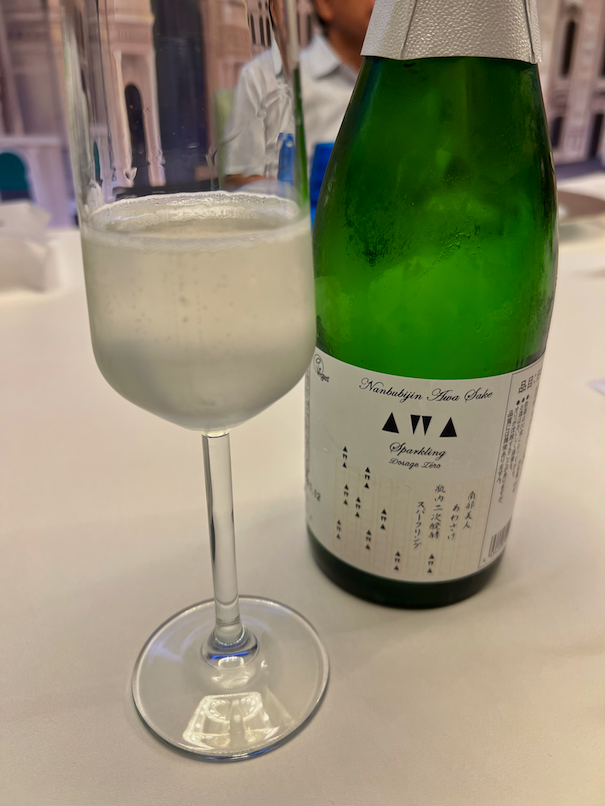
To join the Japan Awasake Association, a brewery must meet all of the following criteria:
- Natural secondary fermentation (tank or bottle) — no injected CO₂
- Brilliant clarity — no haze allowed
- Fine, persistent bubbles with elegant texture
- Only traditional sake ingredients — rice, koji, and water
- Approved ranges of alcohol (min 10%) and gas pressure (min 3.5 bar)
- Third-party laboratory verification for:
- Gas pressure
- Fermentation method
- Aroma and flavour stability
This ensures that every Awa Sake bottle offers finesse, purity, and elegance — worthy of special occasions and global recognition.
An Awa Sake From our B2B Shop
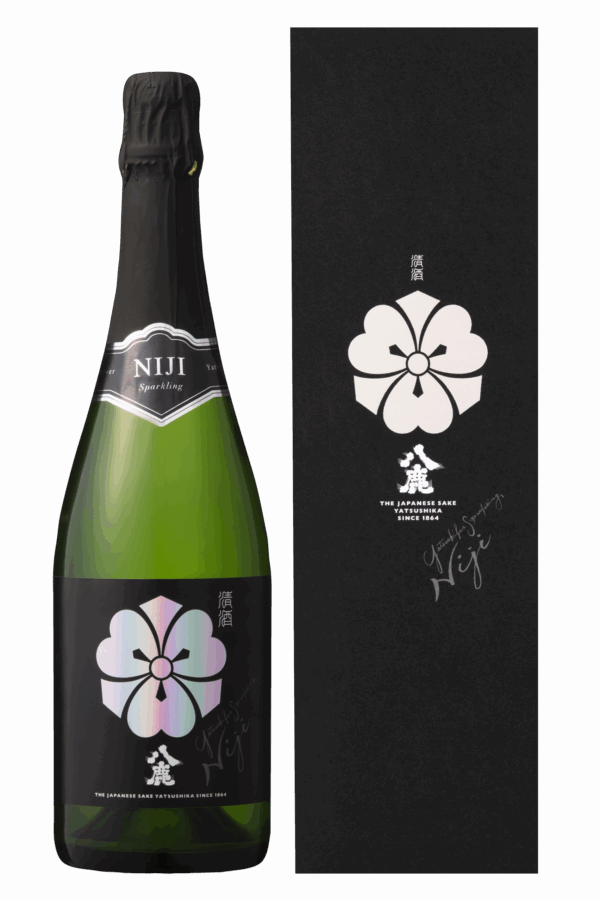
Yatsushika Sparkling Niji
This sparkling junmai sake is crafted from sake rice grown in the rich natural environment of Kokonoe Town, Oita Prefecture, surrounded by the Kuju mountain range, and from pure spring water. The robust, fine bubbles created through secondary fermentation in the bottle add a festive touch to celebratory toasts. It offers the gentle aroma and savory umami of rice unique to sake, combined with a refreshing effervescence—an exquisite new style of Japanese sake.
Awasake vs. Champagne: Similarities & Differences
If you enjoy Champagne, you’ll find familiar sophistication with Awasake. Both involve:
- Secondary fermentation for natural bubbles
- Meticulous craftsmanship
- A celebratory drinking culture
However, the base material and taste profile differ significantly. Awasake uses rice rather than grapes, resulting in softer textures, gentle mousse, and a flavor spectrum ranging from fruity to umami-rich — often with lower acidity than Champagne. The result is an approachable sparkle that pairs beautifully with both Japanese and international cuisines.
As regards alcoholic strength, Awasake generally matches or slightly exceeds Champagne — most Awa Sakes are between 12–14.5 % ABV, whereas an average Champagne is 11- 12 % ABV. The average pressure in an Awa Sake bottle is 3.5 bar as compared to an average Champagne which has 5-6 bar..
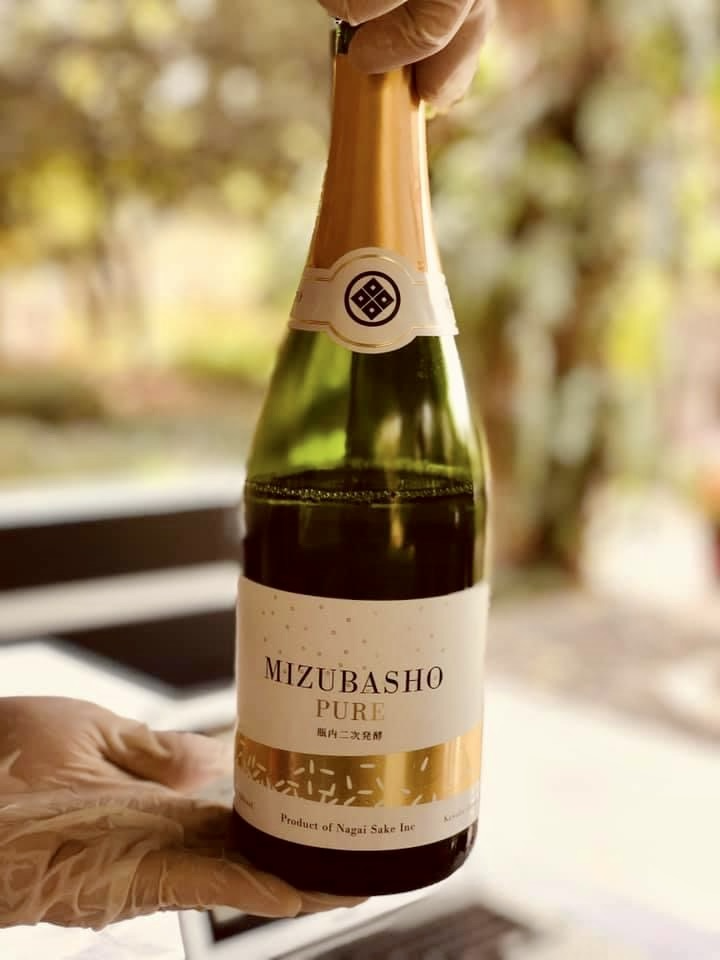
Awasake’s claim to fame
Awa Sake has already begun earning global acclaim, helping it transcend its status as a niche novelty to becoming a world-class sparkling beverage. The category has consistently won awards in reputed competitions like Kura Master (France), Fine Sake Awards Japan and International Wine Challenge. Serving Awa Sake in widely reported events such as G7 summit and Japan Emperor’s Birthday has also brought it under the spotlight.
These milestones show that Awa Sake isn’t just a novelty — it’s being embraced globally as a worthy sparkling beverage in serious tasting and ceremonial contexts.
Are There Sparkling Sakes Made Similarly but are not Awa Sake?
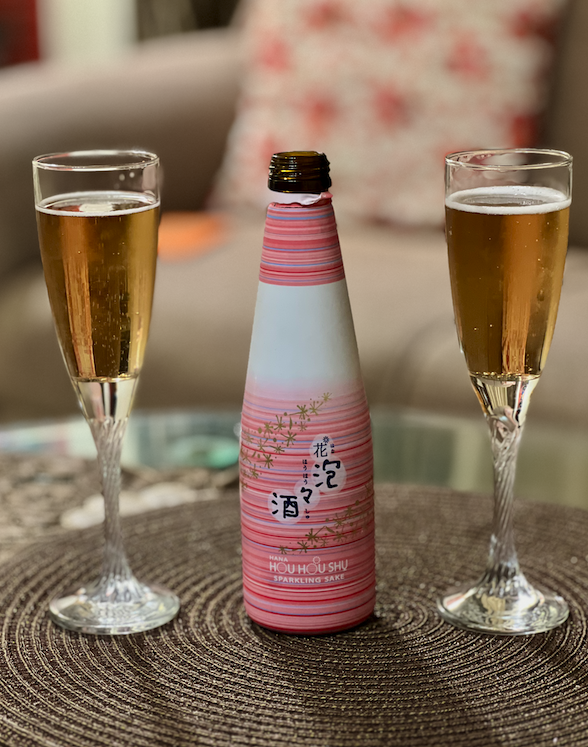
Yes — there are other sparkling Japanese sakes made via bottle- or tank-based secondary fermentation that do not carry the “Awa Sake” certification. Sometimes that’s because the producer chose not to join the Association, other times because the sake doesn’t meet one or more of the Association’s exacting standards (for clarity, bubble structure, ingredients, etc.). Such sakes can still be excellent drinks — perhaps more experimental or artisanal in style — but without the unified “Awa Sake” branding or guarantee of conformity to the Association’s criteria.
Celebrate the Season, Japanese Style!
As Christmas cheer fills our calendars and the countdown to a fresh year begins, Awa Sake can be a novel way to usher in the celebrations. Wishing you a Merry Christmas, a sparkling New Year, and many beautiful celebrations ahead — hopefully with some Awa Sake bubbles dancing in your glass.
Kampai!

