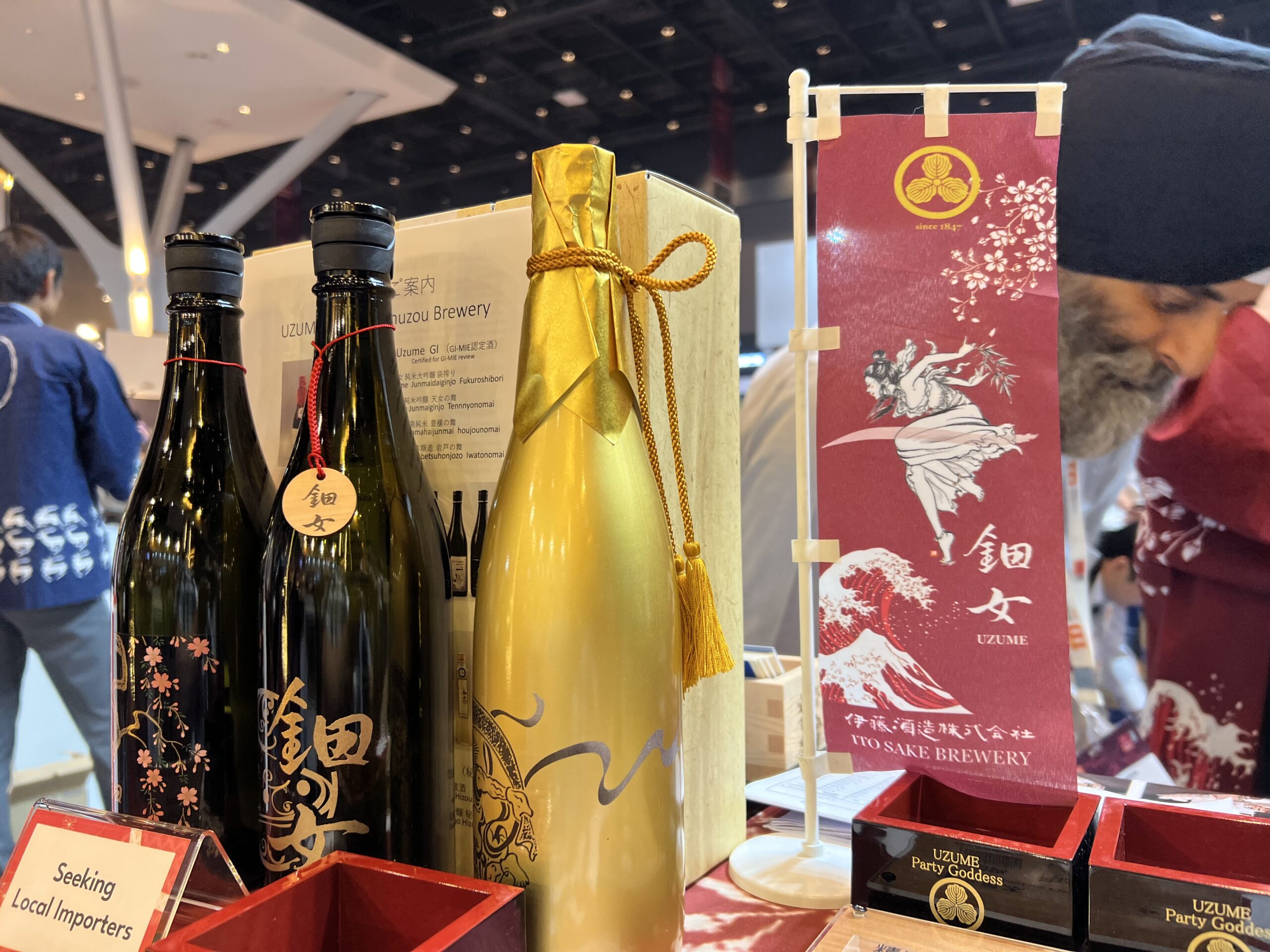
A few days ago, I was sitting with a Japanese shochu producer in the heart of New Delhi, discussing how this remarkable spirit could become more familiar to Indian beverage lovers. The conversation proceeded optimistically, but not without circling back to one fundamental question- how do you explain shochu’s unique standing in a world dominated by familiar distilled spirits such as whisky or vodka?
For many drinkers outside Japan, shochu remains one of the world’s best-kept secrets. It often sits in the shadow of sake and the growing popularity of Japanese whisky, yet in Japan it is one of the country’s most widely enjoyed distilled spirits. Step into an izakaya (a traditional Japanese pub) and you’ll often find more varieties of shochu than whisky. But the story is entirely different elsewhere. For a majority of global consumers, shochu is at best a beverage waiting to be discovered. So much so, that many tend to equate it with vodka and whisky.

Shochu, whisky and vodka- essential differences
What makes shochu so fascinating is that it refuses to fit neatly into the categories of vodka, whisky or any other familiar spirit. It has its own identity, its own production philosophy and even its own legal standards designed to preserve that uniqueness.
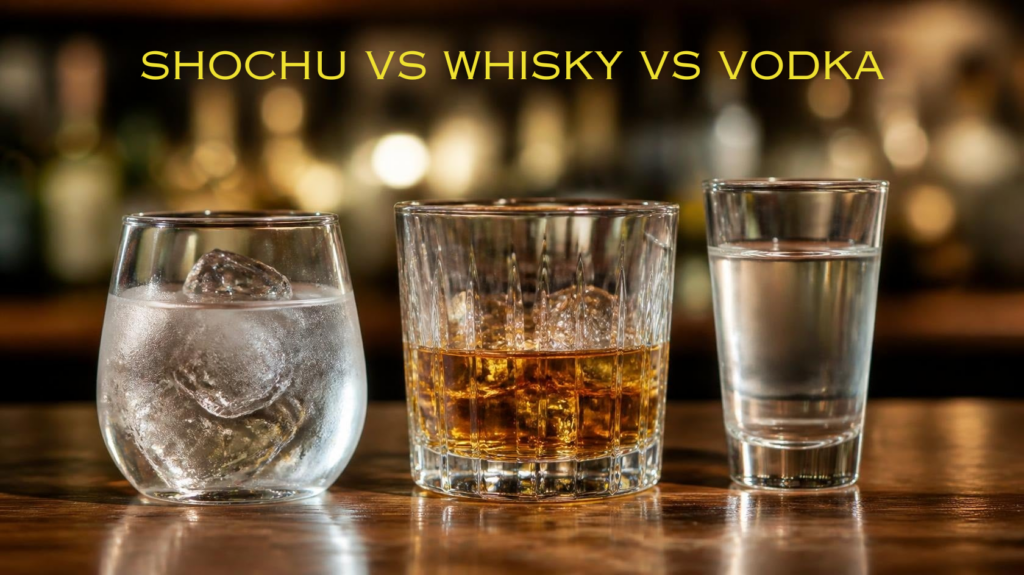
Note: This article primarily discusses Honkaku Shochu (single pot distilled shochu), the traditionally made style that best represents Japan’s indigenous spirit. Shochu can otherwise be made in column stills also.
Source Material
Unlike whisky, which is always made from cereal grains such as barley, wheat, corn or rye; or vodka, which is typically distilled from grains, potatoes and even fruit, shochu can be produced from an astonishing variety of ingredients. Sweet potatoes (imo), barley (mugi), rice (kome), buckwheat (soba), brown sugar (kokuto) and even sake lees can be used to make shochu. The choice of ingredient is not merely cosmetic. It becomes the defining character of the finished spirit.
Shochu is one of Japan’s most diverse and widely enjoyed traditional spirits, with a rich heritage that continues to shape the country’s drinking culture.
- Japan’s Everyday Spirit: Shochu is Japan’s most consumed traditional distilled spirit, outselling Japanese whisky in everyday domestic drinking.
- Remarkable Ingredient Diversity: More than 50 raw materials are legally permitted for authentic shochu production, resulting in one of the broadest flavour spectrums of any major distilled spirit.
- Single Distillation Tradition: Authentic Honkaku Shochu is typically distilled only once, allowing the natural aromas and character of its base ingredient to shine through.
- Protected Identity: Japanese regulations strictly limit the use of oak casks for Honkaku Shochu, ensuring it remains distinct from whisky while preserving its unique style and identity.
From sweet potatoes and barley to rice, buckwheat, and even brown sugar, shochu’s extraordinary diversity makes it one of Japan’s most fascinating yet underrated spirits.
Fermentation
Another major difference lies in fermentation. Whisky depends on malted grains to convert starch into fermentable sugars. Shochu instead relies on koji, a heritage mould that performs this conversion. Koji has been central to Japanese fermentation for centuries, giving products like sake, miso and soy sauce their distinctive qualities. In shochu production, it creates an entirely different flavour profile as compared to Western grain spirits, often resulting in aromas that are fruity, floral or earthy depending on the base ingredient. The two-stage parallel fermentation process is another hallmark of authentic shochu production.
Distillation
Distillation further separates shochu from its Western cousins. Vodka is generally distilled multiple times or through continuous column stills to remove most flavour, creating a clean, almost neutral spirit. Whisky is distilled to retain grain character before developing much of its personality during years of oak maturation.
Honkaku Shochu, however, is usually distilled only once in a pot still. The goal is not neutrality but preservation of the original ingredient’s aroma and flavour. Some producers also employ vacuum distillation, producing lighter and more delicate styles while still allowing the base ingredient to shine.
Also Read: KAZA G-25 — When Shochu Borrows a Page from Whisky
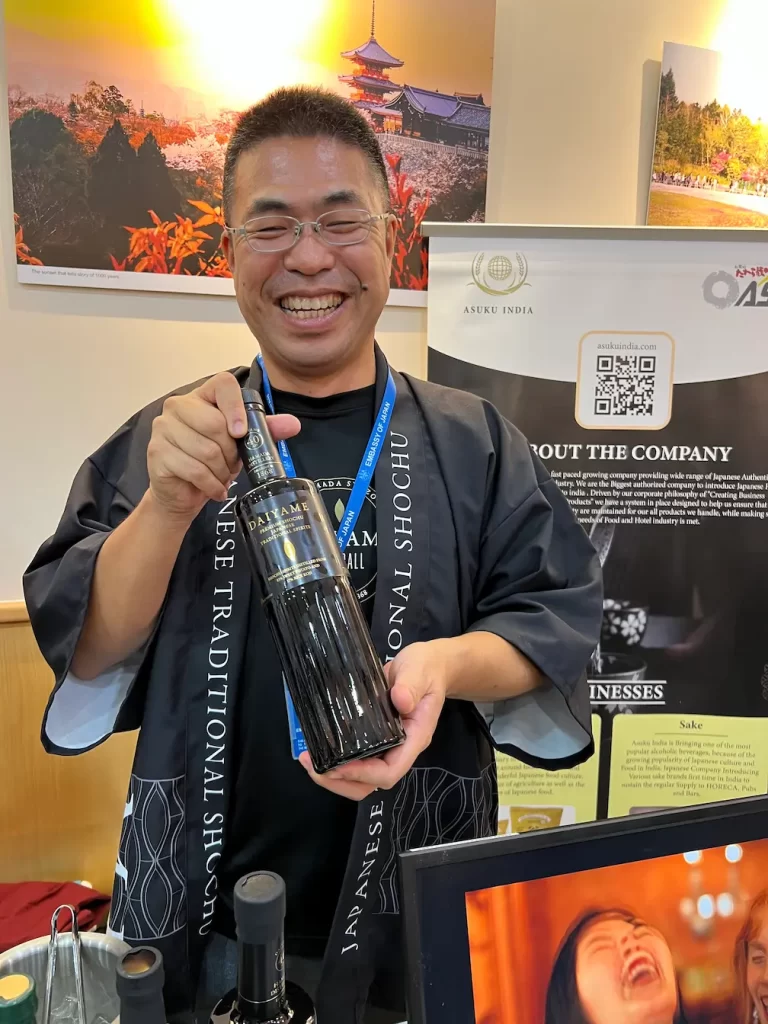
A Conscious Effort to Protect Shochu’s Distinctive Identity
One of the most interesting aspects of shochu is that its unique identity is protected not only by tradition but also by Japanese regulations. Rather than allowing it to become a “Japanese whisky” or a “Japanese vodka,” the rules are designed to preserve what makes shochu special.
Unlike whisky, whose character is shaped largely by prolonged ageing in oak barrels, shochu is intended to express the flavours created by its raw ingredients, koji-based fermentation and distillation. Japanese regulations therefore limit the use of oak casks so that wood does not dominate the spirit’s character and impart any unnecessary colour that may make it resemble whisky.
Likewise, unlike vodka, which is often heavily filtered to achieve neutrality, authentic shochu is not subjected to processes such as birch charcoal filtration that would strip away its natural aromas and flavours.
The result is a spirit with a personality of its own- one that proudly stands apart from both whisky and vodka.
Shochu Flavour Profile and How to Enjoy it
One of shochu’s greatest attractions is its diversity of flavours. Because it retains the character of its base ingredient, no two styles taste alike. Sweet potato shochu is typically rich and aromatic, barley shochu is lighter with subtle nutty notes, while rice shochu is delicate and elegant. This versatility has made shochu an increasingly popular base spirit in cocktail bars, where bartenders use it to create drinks with more depth and character than neutral spirits can offer.
In Japan, however, shochu is most at home in the country’s countless izakayas, where its natural flavours are allowed to shine. Rather than being masked in elaborate cocktails, it is commonly enjoyed straight, over ice, with chilled water (mizuwari), with hot water (oyuwari), or topped with soda for a light and refreshing drink. At an average 25% ABV (officially permissible upto 45% ABV for Honkaku shochu), it is also exceptionally food-friendly, pairing comfortably with everything from sashimi and tempura to grilled meats and everyday Japanese home cooking without overpowering the meal.
The Way Forward
As our conversation in New Delhi drew to a close, one thought stood out. Shochu is unlikely to win over Indian consumers simply by being placed on a retail shelf alongside whisky and vodka. It needs to be discovered—through tastings, thoughtful recommendations by bartenders and sommeliers, and by experiencing how effortlessly it pairs with food. The journey may be gradual, but for those willing to explore beyond the familiar, it promises to be a rewarding one.